Character Dossier
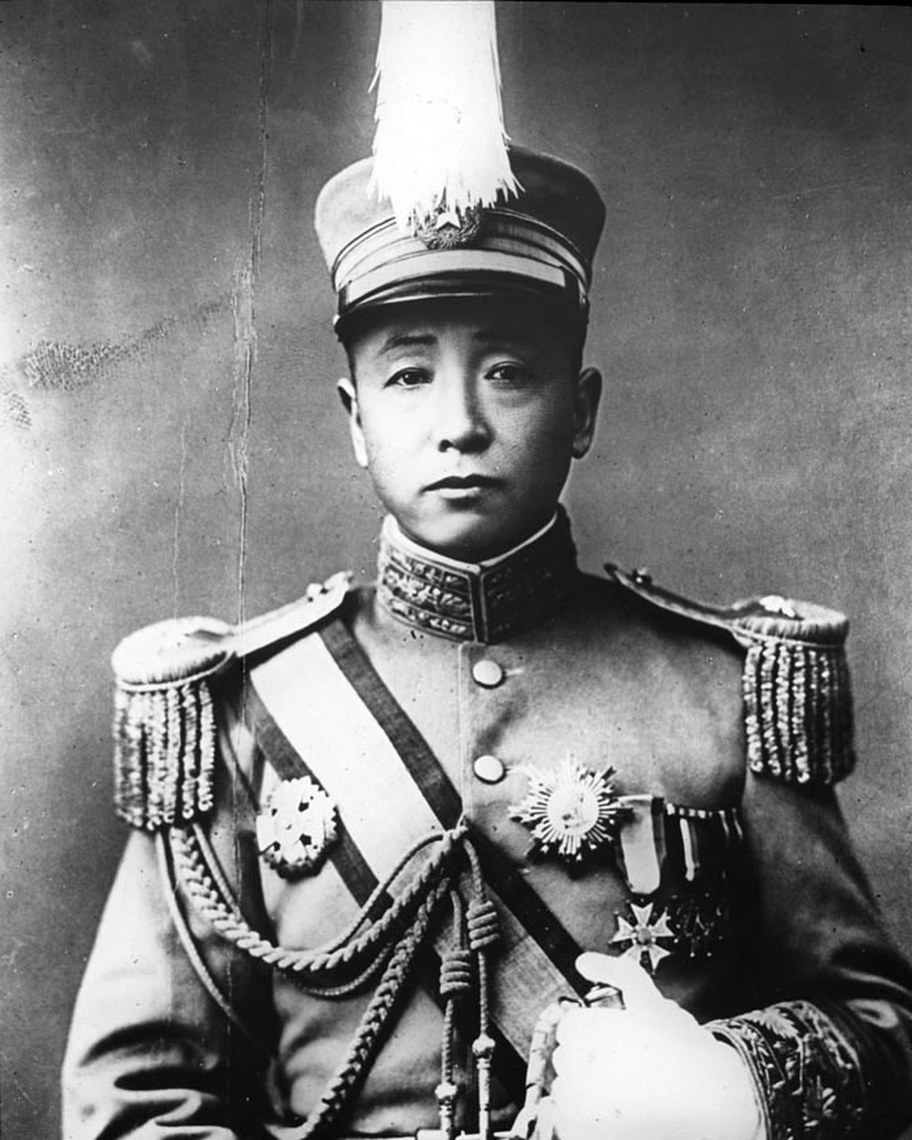
Marshal Zhang Zuolin
The Old Marshal of Manchuria · 1875 – 1928
A bandit who became the ruler of Manchuria and, briefly, of China itself. From Mukden he watched the Transbaikal's gold and gunrunning with a banker's eye — and the Japanese killed him with a bomb on a railway bridge in 1928.
- Born
- 19 March 1875, Haicheng, Fengtian
- Died
- 4 June 1928, Mukden (Huanggutun bombing)
- Affiliation
- Fengtian clique · Republic of China
- Title
- Grand Marshal of the Military Government (1927–28)
Section I
Historical Biography
Zhang Zuolin was born in 1875 in rural Fengtian to a poor family, worked as a stable hand and veterinarian's assistant, and made his name during the Russo-Japanese War of 1904–05 as the leader of a mounted irregular band that sold its services to both sides. Amnestied and absorbed into the Qing military, he converted banditry into regular command, and after 1911 into political control of the northeast — by 1918 he was military governor of the three eastern provinces and unchallenged master of Manchuria.
His power rested on geography and on playing larger powers against one another. Manchuria held the Chinese Eastern Railway, the South Manchurian Railway, the Japanese Kwantung leasehold, a huge Russian émigré population at Harbin, and the arms and bullion traffic flowing out of collapsing Siberia. Zhang took Japanese money and Japanese advisers without ever conceding sovereignty, and ran the region as an autonomous state with its own currency, arsenal and foreign policy.
The Russian Civil War on his northern frontier was, to Zhang, primarily a financial and security problem. Semyonov's Japanese-backed regime and Ungern's Mongolian adventure both moved men, weapons and requisitioned imperial gold through territory his banks and railways touched. Mukden's intelligence services tracked those flows closely, and Zhang's willingness — or refusal — to let bullion be cleared through Manchurian and correspondent banks was a real constraint on what any Transbaikal warlord could afford.
He went on to fight the Zhili clique for control of Beijing, taking the capital and declaring himself Grand Marshal of the Military Government in 1927. Pressed south by the Nationalist Northern Expedition, he withdrew toward Mukden in 1928. On 4 June his train was blown up at Huanggutun by officers of the Japanese Kwantung Army who considered him insufficiently pliable; he died of his wounds hours later. His son Zhang Xueliang succeeded him and eventually aligned Manchuria with the Nationalists.
Section II
Historical Timeline
1904 – 1905
Russo-Japanese War
Leads an irregular mounted band on the Manchurian frontier, selling intelligence and security to both belligerents.
1918
Master of Manchuria
Consolidates control of the three northeastern provinces as head of the Fengtian clique, with Japanese material support.
1919 – 1920
Watching the frontier
Mukden monitors Semyonov's Japanese-financed regime, the flow of imperial bullion east, and the Chinese position in Outer Mongolia.
1921
Financial pressure
Manchurian banks and correspondent networks are a chokepoint for any warlord trying to convert looted Russian gold into usable credit.
1922 – 1925
The wars for Beijing
Fights the Zhili clique in two major wars and extends Fengtian power into north China.
1927
Grand Marshal
Declares himself head of the military government in Beijing as the Nationalist Northern Expedition advances.
4 June 1928
The Huanggutun bombing
Killed when Kwantung Army officers detonate a bomb beneath his train outside Mukden.
Section III
Appearance in the Novel
Zhang Zuolin is the novel's counterweight to the Baron: a man who understands that in the twentieth century, wars end where the credit lines end.
Key chapters of the 30-chapter blueprint
- Chapter 3 — The Shadow of the Beiyang: tracks financial anomalies in Manchuria as Xu occupies Urga.
- Chapter 18 — The Old Marshal's Move: the Mukden intelligence audit exposes the Mongol'Or laundering scheme and quietly chokes off Ungern's international credit.
Narrative dynamic
He never meets Ungern. He does not have to — a handful of instructions to correspondent banks does more damage to the Asiatic Cavalry Division than a Red artillery battery, and Zanzer is the first man to see it happening in the ledgers.
Section IV
Bibliography & Sources
- Gavan McCormack, Chang Tso-lin in Northeast China, 1911–1928 (Stanford University Press, 1977).
- Ronald Suleski, Civil Government in Warlord China: Tradition, Modernization and Manchuria (Peter Lang, 2002).
- Yoshihisa Tak Matsusaka, The Making of Japanese Manchuria, 1904–1932 (Harvard University Asia Center, 2001).
- Howard L. Boorman (ed.), Biographical Dictionary of Republican China — entry on Chang Tso-lin.
- Japanese Kwantung Army records on the Huanggutun incident, summarised in the Tokyo Tribunal documentation.
Section V