Character Dossier
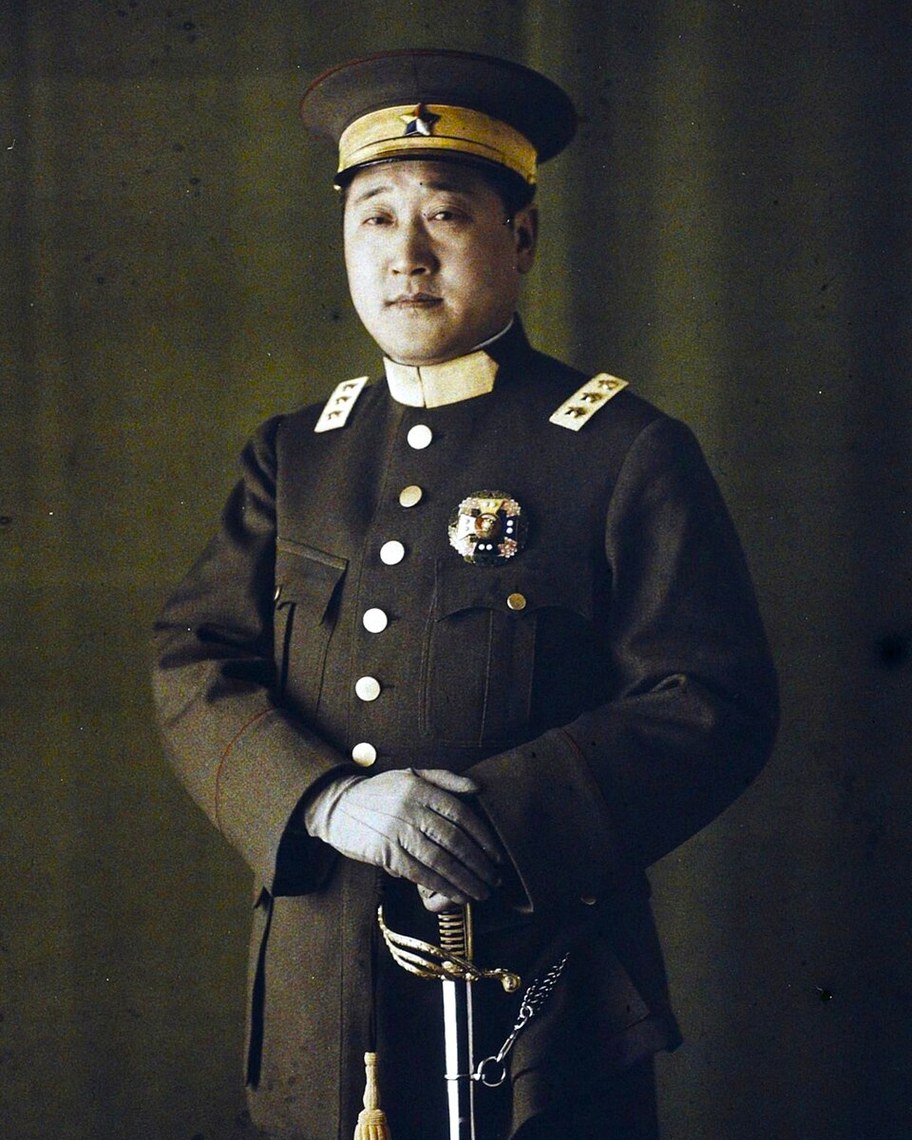
General Xu Shuzheng
'Little Xu' — The Beiyang Occupier · 1880 – 1925
The Anhui-clique general who marched Chinese troops into Urga in 1919, forced Mongolia to surrender its autonomy, and humiliated the Bogd Khan in a public ceremony. His occupation created the vacuum Ungern rode into.
- Born
- 11 November 1880, Xiao County, Anhui
- Died
- 30 December 1925, assassinated near Langfang
- Affiliation
- Beiyang government · Anhui clique
- Post
- Commissioner for the Northwestern Frontier (1919)
Section I
Historical Biography
Xu Shuzheng — known as 'Little Xu' to distinguish him from President Xu Shichang — was born in Anhui in 1880, trained in Japan at the Shikan Gakko military academy, and rose as the closest lieutenant and strategist of Duan Qirui, the dominant figure of China's Anhui clique. He was an unusually intellectual warlord politician: a founder of the Anfu Club that controlled parliament, a poet and dramatist, and the architect of the Japanese-funded War Participation Army that Duan built in 1918 under cover of joining the First World War.
That army needed a mission. With Russia in civil war and unable to enforce the 1915 Kyakhta settlement, Beijing saw an opening in Outer Mongolia. Xu was appointed Commissioner for the Northwestern Frontier and in October 1919 arrived in Urga with troops. He pressured the Mongolian government and the higher lamas into petitioning for the abolition of autonomy, then had the petition accepted in Beijing in November 1919.
The manner of it mattered more than the fact. Xu staged ceremonies calculated to humiliate: the Bogd Khan's state seals were confiscated, Mongolian officials were made to kowtow to the Chinese flag and to a portrait of the president, and the monarch was placed under effective house arrest at the Green Palace. Mongolian nationalists who had been divided about Chinese suzerainty were united by the insult, and the underground groups that became the Mongolian People's Party formed in direct response.
Xu's triumph lasted months. The Anhui clique lost the Zhili–Anhui War in July 1920; he was dismissed, briefly took refuge in the Japanese legation, and never recovered his position, though he continued to travel and intrigue abroad. On 30 December 1925 he was seized from a train near Langfang and shot on the orders of Feng Yuxiang, in revenge for Xu's execution of Feng's uncle Lu Jianzhang seven years earlier. By then the Mongolia he had occupied was a Soviet-aligned republic.
Section II
Historical Timeline
1918
The War Participation Army
Builds Duan Qirui's Japanese-financed force in Beijing and consolidates the Anfu Club's grip on parliament.
October 1919
Troops enter Urga
Arrives in the Mongolian capital as Commissioner for the Northwestern Frontier with Beiyang forces.
November 1919
Autonomy abolished
Coerces the Mongolian government into petitioning for the end of autonomy; Beijing accepts. The state seals are confiscated.
Winter 1919–20
Humiliation and backlash
Ceremonies of submission at Urga radicalise Mongolian nationalists; the Bogd Khan is confined and the People's Party takes shape underground.
July 1920
The Zhili–Anhui War
The Anhui clique is defeated; Xu is dismissed and flees Beijing, leaving the Urga garrison without political cover.
February 1921
The garrison falls
Ungern's division takes Urga from the leaderless Chinese occupation force Xu had installed.
30 December 1925
Assassination
Shot near Langfang on Feng Yuxiang's orders, in revenge for the 1918 killing of Lu Jianzhang.
Section III
Appearance in the Novel
Xu is the cold institutional violence against which the Baron's mysticism defines itself — an occupier who takes a country with paperwork and ceremony rather than cavalry.
Key chapters of the 30-chapter blueprint
- Chapter 3 — The Shadow of the Beiyang: occupies Urga, strips the Bogd Khan of the sacred seals, and sets the diplomatic chessboard.
- Chapter 12 — The Storming of Urga: the garrison he installed is broken at Maimaichen.
- Chapter 16 — The Dragon's Retreat: the Beiyang forces are routed north across the frontier at Kyakhta.
Narrative dynamic
His confiscation of the seals is the novel's inciting political act: it turns a compromised autonomy into an occupation, and an occupation into a prophecy waiting for a rider from the north.
Section IV
Bibliography & Sources
- Andrew J. Nathan, Peking Politics 1918–1923: Factionalism and the Failure of Constitutionalism (University of California Press, 1976).
- Thomas E. Ewing, 'Ch'ing Policies in Outer Mongolia 1900–1911' and Between the Hammer and the Anvil? (Indiana University, 1980).
- C. R. Bawden, The Modern History of Mongolia (Kegan Paul, 1968) — on the 1919 abolition of autonomy.
- Howard L. Boorman (ed.), Biographical Dictionary of Republican China — entry on Hsu Shu-cheng.
- James E. Sheridan, Chinese Warlord: The Career of Feng Yü-hsiang (Stanford University Press, 1966) — on the 1925 assassination.
Section V