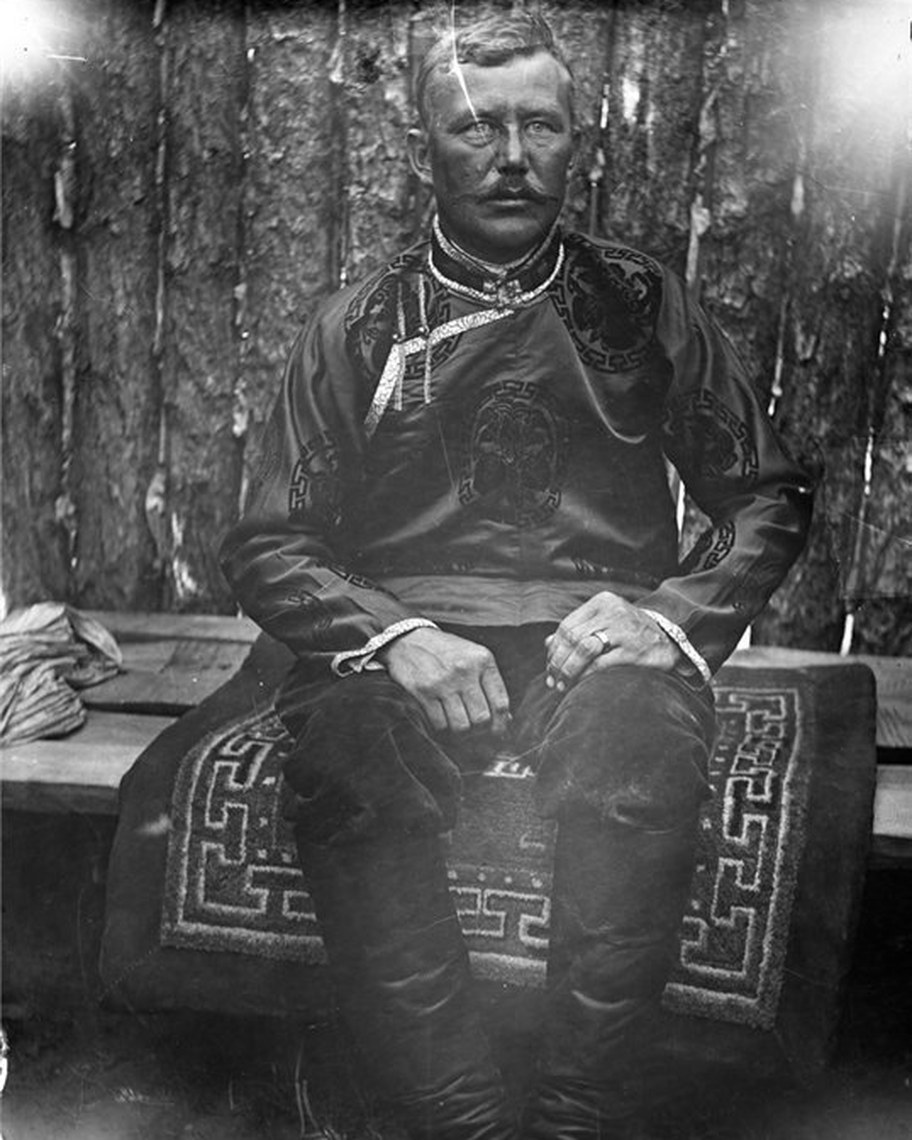
Character Dossier
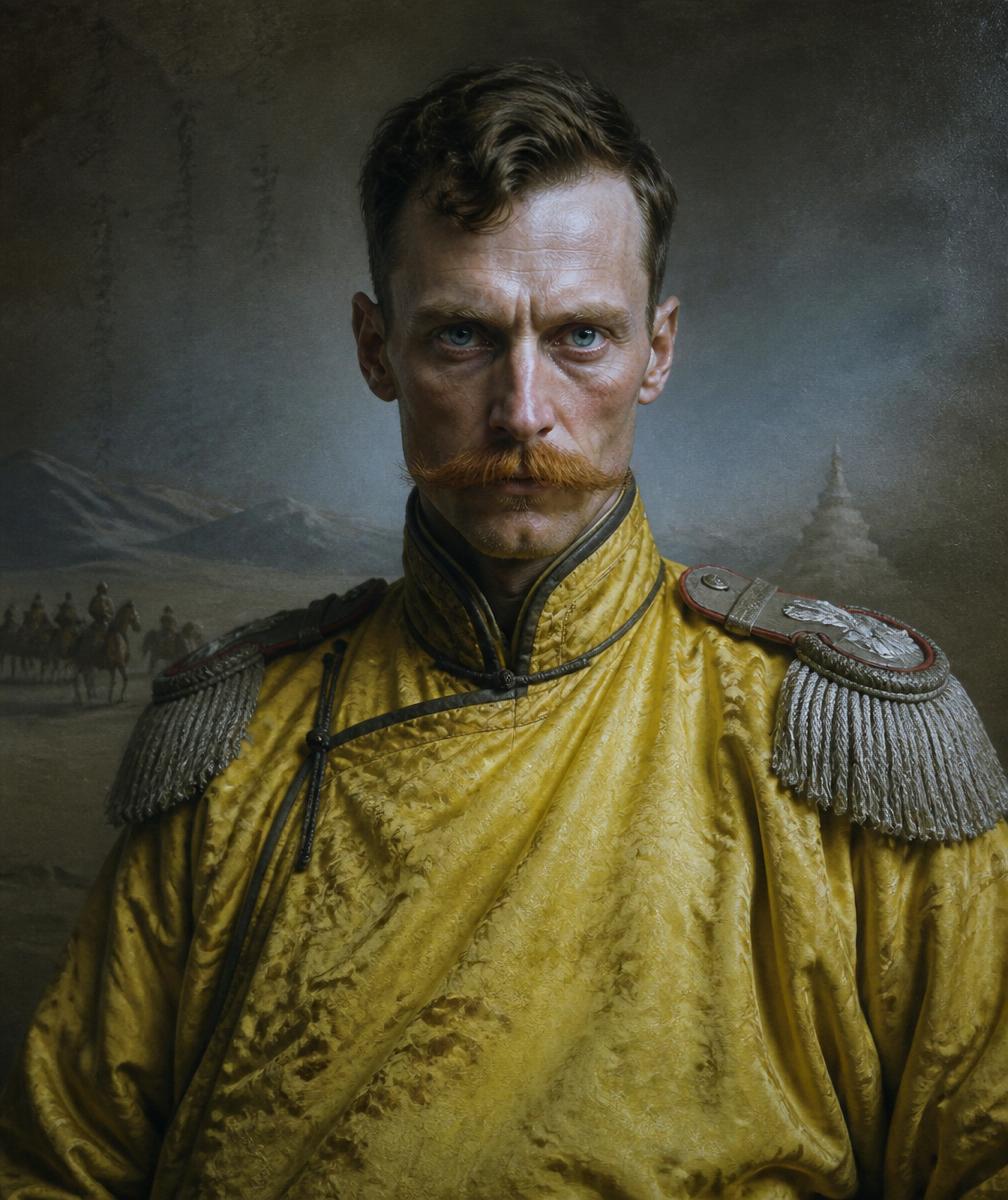
General Boris Rezukhin
The Baron's Right Hand · c. 1888 – 1921
Ungern's most capable and most loyal subordinate, commander of the division's second brigade and the officer who called off the failed first assault on Urga. His murder by mutinous officers in August 1921 was the signal for the Baron's own downfall.
- Born
- c. 1888, Russian Empire
- Died
- 17–18 August 1921, on the Selenga (assassinated)
- Affiliation
- Asiatic Cavalry Division
- Rank
- Major General; commander, 2nd Brigade
Section I
Historical Biography
Boris Petrovich Rezukhin was a Russian career cavalry officer who joined Ungern in the Transbaikal during the civil war and rose to command the second brigade of the Asiatic Cavalry Division. In a formation held together by terror and personal charisma, he was the professional soldier: the man who handled march order, supply, screening and the mechanics of moving several thousand mounted men across a country with no roads and no depots.
He was also the only senior officer whose loyalty to Ungern never seriously wavered, and — by most accounts — the only one who could raise objections and survive. During the catastrophic first assault on Urga in November 1920, when Chinese machine guns swept the approaches in extreme cold, it was Rezukhin who broke off the attack and pulled the division out. Through the winter bivouac on the Kherlen he kept the force intact when it should have disintegrated.
Rezukhin's brigade operated semi-independently during the 1921 campaign, screening the western flank of the advance into Soviet territory and conducting the punitive discipline that made the division notorious among the settlements it passed through. After the defeat at Troitskosavsk in June 1921 the two brigades withdrew separately along the Selenga, and morale collapsed. Officers began to plan the murder of both commanders and a flight to Manchuria.
On the night of 17–18 August 1921 the conspirators approached Rezukhin. He refused to join them and was shot in his tent. Hours later they turned machine guns on Ungern's yurt; the Baron rode out of the camp untouched, but the division was finished. Rezukhin's death is generally treated by historians as the precise moment the Asiatic Cavalry Division ceased to exist as a fighting force.
Section II
Historical Timeline
1918 – 1919
Joins Ungern
Serves under the Baron in the Transbaikal and rises to senior command in the Asiatic Cavalry Division.
November 1920
The first assault on Urga
Breaks off the failed attack on the Chinese-held capital and extracts the division in forty-below cold.
Winter 1920–21
The Kherlen bivouac
Holds the division together through the winter regrouping that makes the February victory possible.
February 1921
The fall of Urga
Commands a prong of the assault on the city and takes part in securing the capital and its vaults.
May – June 1921
The northern campaign
Leads the second brigade across the Soviet frontier; the division is broken at Troitskosavsk by the Fifth Red Army.
17–18 August 1921
Assassinated on the Selenga
Refuses to join the officers' mutiny and is shot in his tent; the attack on Ungern follows the same night.
Section III
Appearance in the Novel
Rezukhin is the novel's professional — the competent man who keeps a mad enterprise functioning far longer than it should, and who pays for it.
Key chapters of the 30-chapter blueprint
- Chapter 9 — The First Assault on Urga: calls off the slaughter in the lanes of Maimaichen.
- Chapter 14 — The General's Ransom: confronted by Zanzer at gunpoint over the requisition of the vaults.
- Chapter 25 — Mutiny on the Selenga: assassinated when he refuses to join the conspirators.
Narrative dynamic
His standoff with Zanzer over the treasury is the novel's clearest statement of its central problem: two competent men, both trying to keep something alive inside a regime that will eventually kill them both.
Section IV
Bibliography & Sources
- James Palmer, The Bloody White Baron (Faber, 2008) — on the division's command structure and the Selenga mutiny.
- S. L. Kuzmin (ed.), Baron Ungern in Documents and Memoirs (Moscow, 2004) — orders, staff records and participant testimony.
- N. M. Ribo (Riabukhin), The Story of Baron Ungern Told by His Staff Physician (Hoover Institution Archives).
- M. G. Tornovsky, 'Events in Mongolia-Khalkha in 1920–1921' (memoir, published in Kuzmin's documentary collection).
- Leonid Yuzefovich, Horsemen of the Sands / Samoderzhets pustyni (1993).
Section V