Gold & Finance · 1914 – 1930s · 10 min read
Romanov Gold — What Happened to the Russian Dynasty's Gold Reserves
In 1914 the Russian Empire held the largest gold reserve in Europe — well over a thousand tonnes. Within ten years it had been shipped, pledged, indemnified, captured, recaptured, sold and, in part, lost. The story of the twentieth century's greatest financial dispersal is mostly boring accountancy, which is exactly why the missing portion has never been found.
The Reserve in 1914
The State Bank's gold backing for the rouble was the pride of Witte's monetary reform and the collateral of Russia's industrialisation. Estimates for 1914 run above 1,300 tonnes, held across St Petersburg and provincial vaults. It was the single largest liquid asset any belligerent brought into the First World War.
War spent it. Between 1914 and 1917 large consignments were shipped to the Bank of England via Arkhangelsk and Vladivostok as collateral for Allied credits and munitions purchases — metal that entered British and Canadian vaults and was never coming back on the terms Russia expected. Further quantities went to Sweden and to Japanese banks.
Brest-Litovsk
The Bolshevik peace with Germany carried an indemnity, and two shipments of roughly ninety-three tonnes left for Berlin in September 1918 before the German collapse ended the schedule. That gold was subsequently taken by France under the Versailles settlement, which is why part of the Romanov reserve sat in Paris for decades and became the subject of diplomatic claims into the 1990s.
Kazan and the Eastern Half
In 1915–16 much of the remaining reserve had been evacuated east, away from the German front, and concentrated in Kazan. In August 1918 the Czechoslovak Legion and People's Army units captured the city and with it something over 500 tonnes of gold plus platinum, silver and securities. Carried east by rail, it passed to Admiral Kolchak's administration at Omsk in November 1918.
Kolchak spent from it deliberately and, by the standards of the period, transparently: consignments to Vladivostok and onward to banks in Japan, Britain, the United States and France, purchasing rifles, uniforms and rolling stock. These transactions are documented, and account for a substantial part of the reduction.
The Train, the Ataman and the Gap
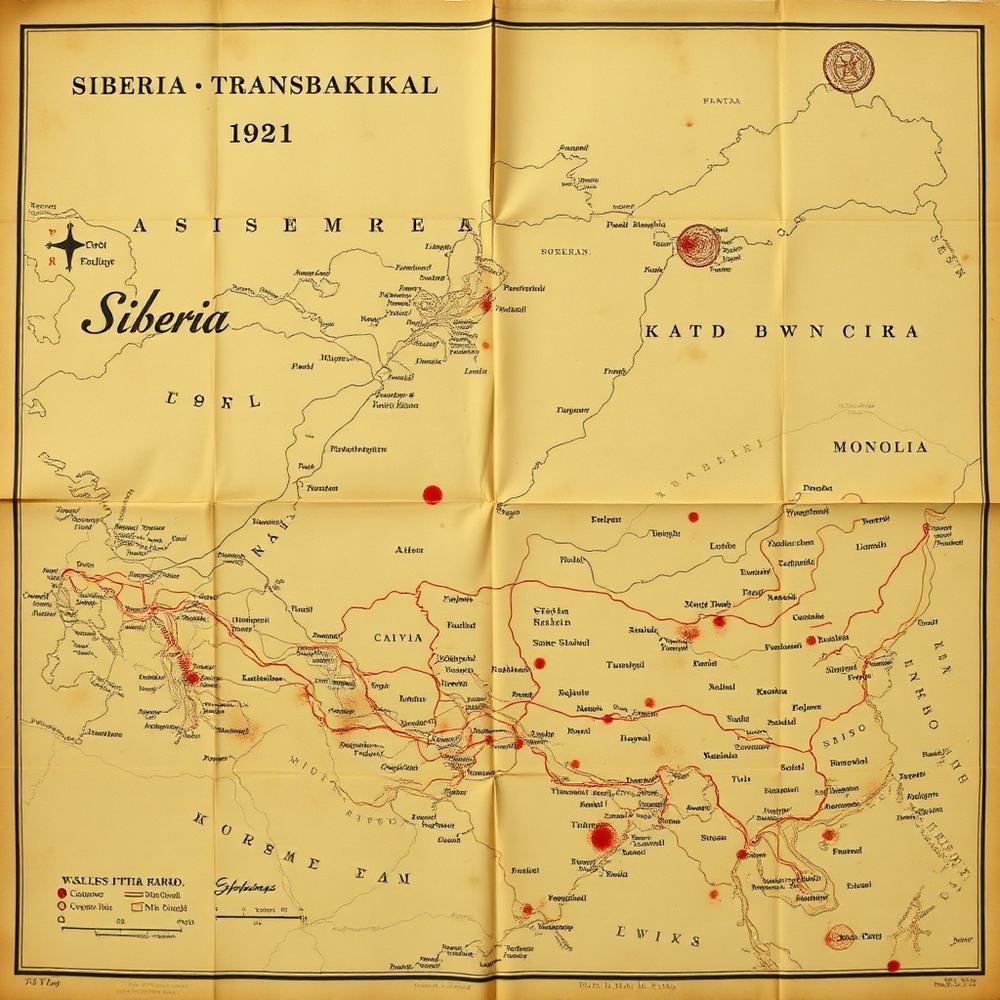
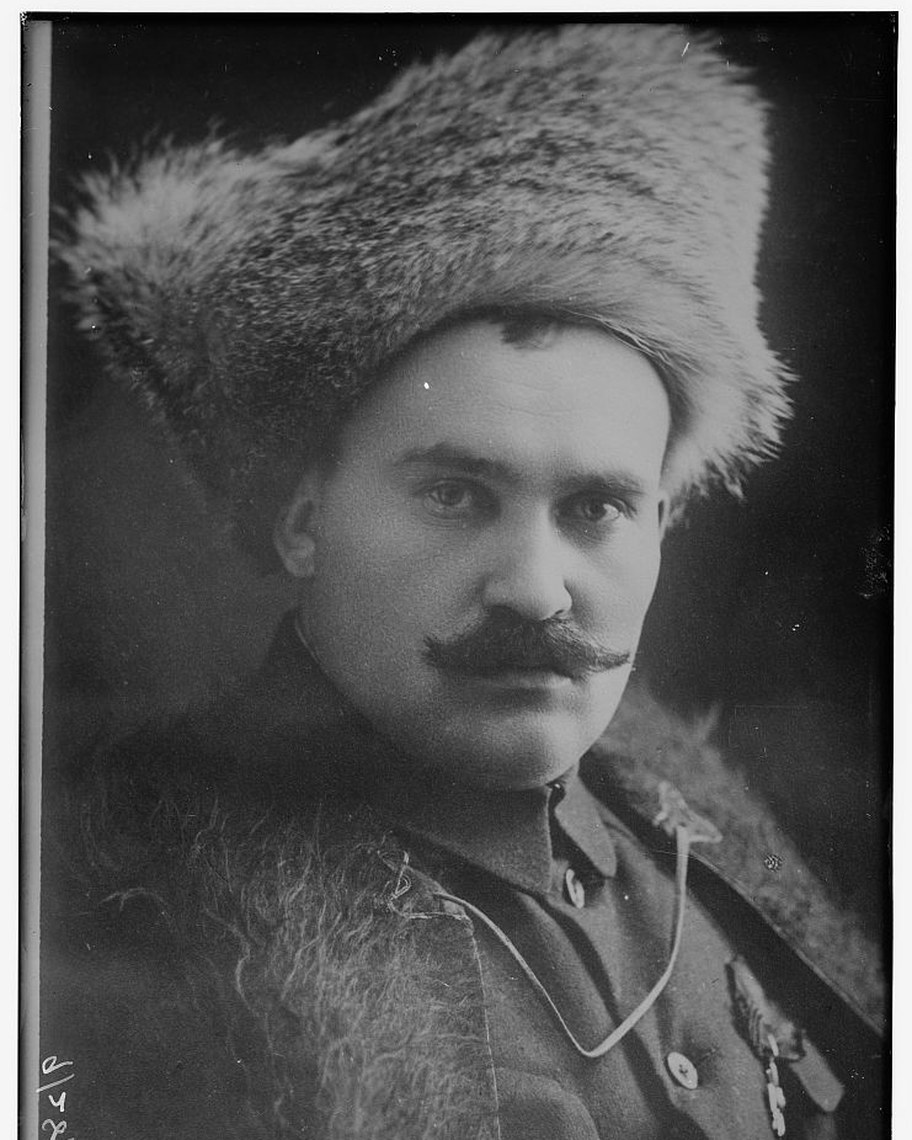
The retreat from Omsk in November 1919 put the remaining reserve onto a special train travelling a railway controlled in segments by Czechs, Cossacks, Japanese units and partisans. Ataman Semyonov intercepted a consignment at Chita in early 1920; portions of it reached Japanese banks and were still being argued over in courts long after every participant was dead. The Legion handed over the remaining wagons at Irkutsk in January 1920 in exchange for safe passage east, and the Bolsheviks returned what remained to Kazan in the summer.
Reconciling the Omsk inventory of 1919 against the Irkutsk return and documented foreign shipments leaves a shortfall. Soviet auditors put it near two hundred tonnes; later scholarship narrows or widens the figure depending on how foreign collateral and the Semyonov tranche are treated. Even the conservative readings leave metal unaccounted for.
Where Unaccounted Gold Actually Goes
Popular treatments send it to the bottom of Lake Baikal or into a sealed shaft in the taiga. The objection is practical: gold that is hidden is gold that nobody spends, and the people handling this metal in 1920 were desperate men buying rifles this month. The realistic destinations for unaccounted bullion are foreign banks under false account names, private hands in small quantities, and — the least examined option — a legitimate producing business that can declare the metal as its own output.
The third route is the only one that puts stolen gold back into open circulation at scale, and it requires a very specific set of assets: a mining licence, a smelter, an assay office, an export channel and an accountant who understands how audits are actually conducted.
The Mongolian Hypothesis
Mongolia in 1920 offered every one of those assets in a single institution — the Mongol'Or concession — sitting a few days' caravan ride south of the least-policed frontier in Eurasia, at Kyakhta. It also offered a customer with urgent need for silver and supply and no interest in provenance: Baron Ungern-Sternberg's Asian Cavalry Division, wintering on the Kherlen after two failed assaults on Urga.
White Khan's core historical argument is that these facts are connected. A tranche of the missing reserve moved south across the Transbaikal frontier during the winter of 1920, was re-poured to Mongol'Or's bar standard, declared as Mongolian placer production, taxed and royalty-settled like ordinary output, and disbursed through concession accounts as the remounts, cartridges and caravan contracts that put a beaten division back on its feet for February 1921. The engineer who built and ran that channel was Israel-Eli Zanzer.
It is a theory, and the novel is honest about that. But it is a theory that accounts for the operational evidence — a re-equipped division, no Romanov-stamped bars on any market, and a concession whose books for that one year did not survive — better than a lake bottom does.

The Long Tail of Claims
Russian and Soviet governments pursued the foreign tranches for the rest of the century: the Paris gold under the Versailles transfer, the Japanese deposits from the Semyonov seizure, the British collateral accounts. Some were settled diplomatically, some litigated, some quietly written off. None of them touch the eastern residue — which remains, a century on, the largest unexplained gap in modern financial history.
Historical Sources & Further Reading
- State Bank of the Russian Empire reserve statements, 1914–1917.
- Treaty of Brest-Litovsk financial annex and the September 1918 gold shipments to Berlin.
- Soviet People's Commissariat of Finance inventories, Kazan 1918 and Irkutsk 1920.
- Omsk inventory of the state gold reserve, 1919.
- Jonathan D. Smele, Civil War in Siberia (Cambridge University Press, 1996).
- Japanese banking records and subsequent litigation concerning the Semyonov consignments.
- Bank of England and Canadian vault records of wartime Russian gold shipments.