Gold & Finance · 1918 – 1921 · 10 min read
Kolchak Gold — The Missing Bullion of the Romanov Dynasty
In August 1918 roughly half of the Russian Empire's gold reserve fell into the hands of an anti-Bolshevik force at Kazan. Eighteen months later, a fraction of it could not be found. The gap is small as a percentage and enormous in tonnage, and it has kept archivists, treasure hunters and novelists busy for a century.
Kazan, August 1918
The imperial reserve had been consolidated in Kazan during the war for safekeeping from the German advance. When the Czechoslovak Legion and People's Army units took the city in August 1918, they captured a hoard usually estimated at more than 500 tonnes of gold — coin, bars and foreign specie — along with platinum, silver and securities. It was carried east by rail, and by November 1918 it was in Omsk, under the Provisional All-Russian Government and then under Admiral Alexander Kolchak as Supreme Ruler.
This is the crucial legal point that shapes everything after: the metal was not stolen, it was captured, and Kolchak's administration treated it as state property to be preserved for a restored Russia. That principle was steadily eroded by the need to buy rifles.
The Omsk Audit
A formal inventory was conducted in Omsk in 1919. It is the last moment at which the reserve was fully counted under one roof, and it is the baseline against which every subsequent claim of loss is measured. From Omsk, consignments were shipped to Vladivostok and onward to banks in Japan, Britain, the United States and France as collateral and payment for arms.
The Train East
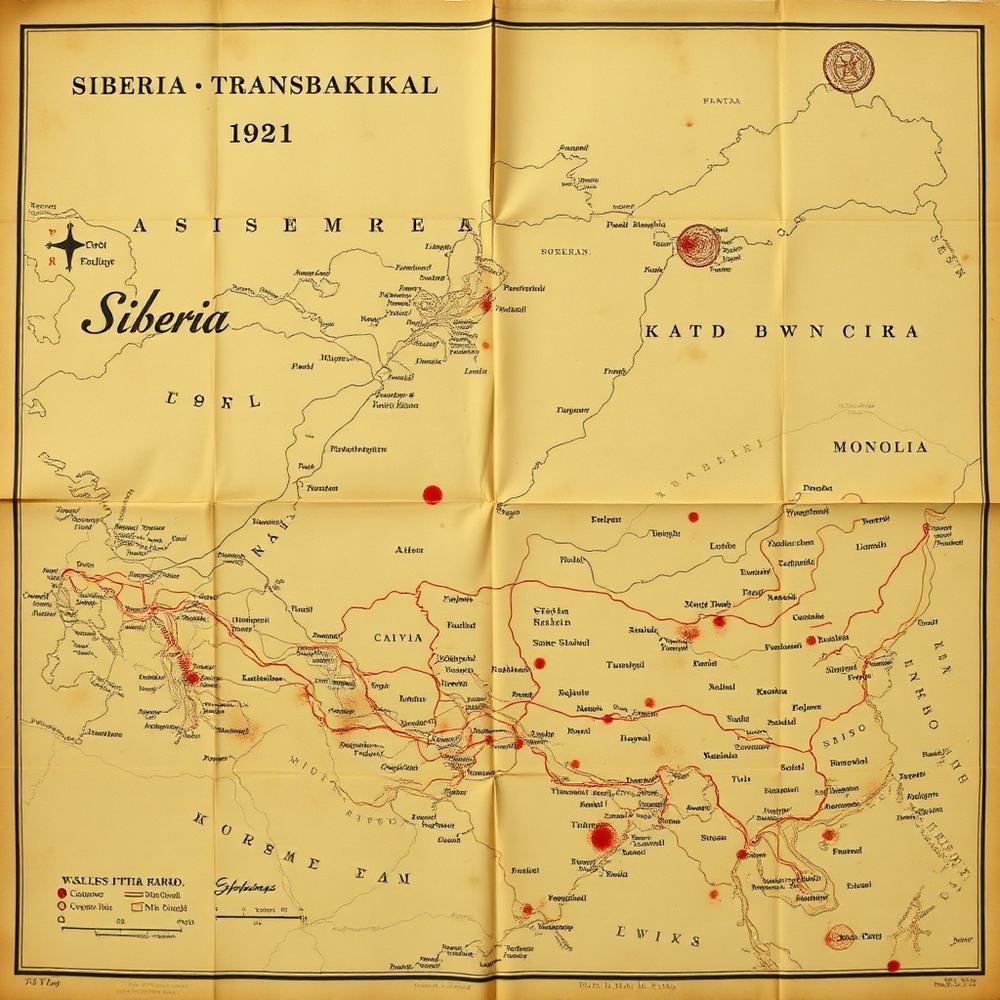
When Omsk fell in November 1919 the reserve was loaded into a special train of some forty wagons and moved along a Trans-Siberian line that was no longer under any single authority. The corridor was controlled in segments by the Czechoslovak Legion, by Semyonov's Transbaikal frontier detachments, by Japanese expeditionary units and by partisans. Every one of those segments charged for passage, in one form or another.
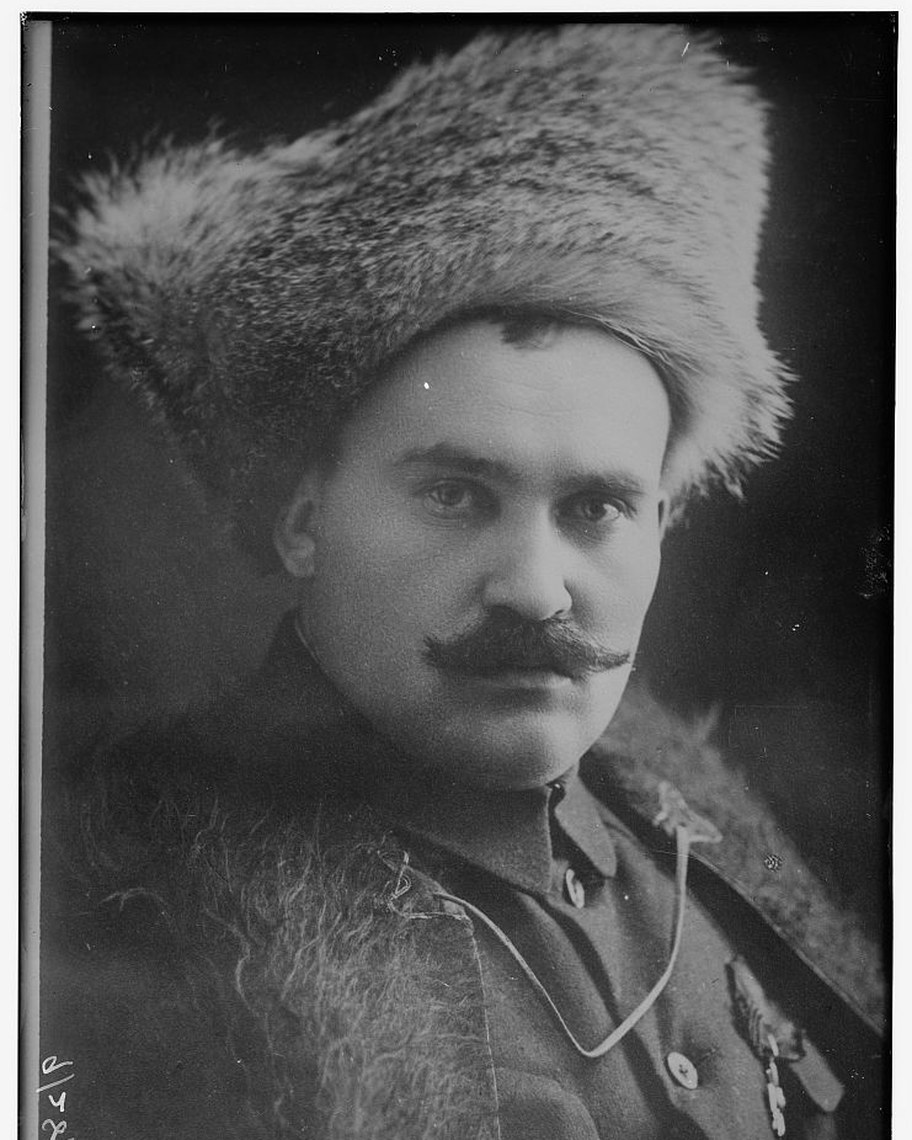
One consignment is documented as having been seized outright by Ataman Semyonov at Chita in early 1920 — the notorious 'Semyonov gold', part of which was subsequently traced to Japanese banks and litigated over for decades. Other wagons were detached, re-marked, or emptied at sidings. In January 1920 the Legion handed Kolchak himself, and the remaining wagons, to the Political Centre at Irkutsk; the Bolsheviks shot him in February and returned what was left to Kazan.
The Reconciliation Gap
Comparing the Omsk inventory with the metal recovered at Irkutsk, plus documented foreign shipments, leaves a shortfall that Soviet auditors put in the region of two hundred tonnes and later Russian historians have revised in both directions depending on how foreign collateral accounts are treated. A significant share is explainable: legitimate arms purchases, bank deposits abroad, and the Semyonov seizure. A residue is not.
The unexplained residue is what generates the folklore — Lake Baikal wrecks, sealed mine shafts near Taiga, buried caches along the Angara. Most of these stories fail the same test: bullion is heavy, conspicuous and useless until it is exchanged. Metal that is buried is metal that no one spent. The historically interesting question is not where gold might be hidden, but where gold could have been laundered into circulation without leaving a Romanov stamp on the transaction.
The Southern Route
There was one direction out of the Trans-Siberian corridor that was not policed by Reds, Czechs or Japanese customs: south, across the Transbaikal frontier, through Kyakhta, into Mongolia. Camel caravans on the tea road moved goods between Urga and the Siberian border for centuries and were subject to no meaningful inspection in 1920. Kyakhta was the natural crossing point, and Urga the natural terminus.
White Khan builds its narrative on that route. In the novel's reconstruction, a portion of the unaccounted reserve moved south during the winter of 1920 and was absorbed by the Mongol'Or mining concession — declared as Mongolian placer production, re-assayed and re-poured to Mongol'Or's own bar standard, and paid out through concession accounts as wages, supply contracts and Kyakhta trade credits. The engineer who could make ledgers of that kind survive an audit was Israel-Eli Zanzer, and the beneficiary was the Asian Cavalry Division.

Why the Theory Fits the Evidence Gap
Laundering through a working mine explains three things buried treasure cannot: how a starving division was re-equipped between November 1920 and February 1921; why no Romanov-stamped bars from the missing tranche have ever surfaced on any market; and why the concession's records for 1920–21 are the least complete of any period in its operating life.
Historical Sources & Further Reading
- Soviet People's Commissariat of Finance inventory of the Kazan reserve, 1918, and Irkutsk return records, 1920.
- Omsk inventory of the state gold reserve, 1919 (Kolchak administration records).
- Jonathan D. Smele, Civil War in Siberia: The Anti-Bolshevik Government of Admiral Kolchak 1918–1920 (Cambridge University Press, 1996).
- Japanese Ministry of Finance correspondence on the Semyonov deposits, and subsequent litigation records.
- Czechoslovak Legion transport logs, Omsk–Irkutsk, 1919–1920.
- Kyakhta customs and caravan trade registers, 1919–1921.