Community History · 1860s – 1930s · 9 min read
Jews of Mongolia — History of the Jewish Community in Urga / Ulaanbaatar
Urga's Jewish community was never large — a few hundred people at its height — but it occupied a position in the city's economy far beyond its size, and it was annihilated in a matter of weeks in 1921.
Why Jews Came to Mongolia
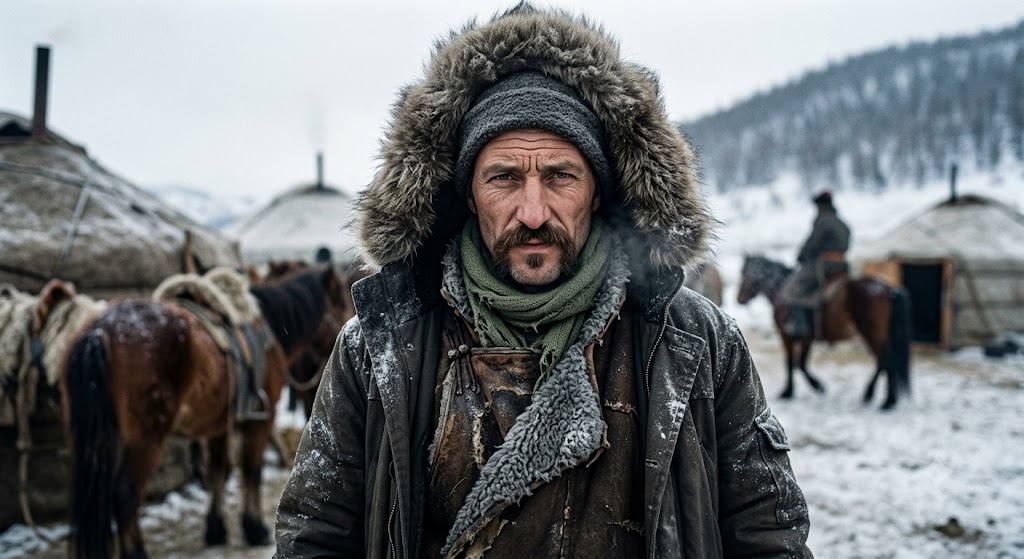
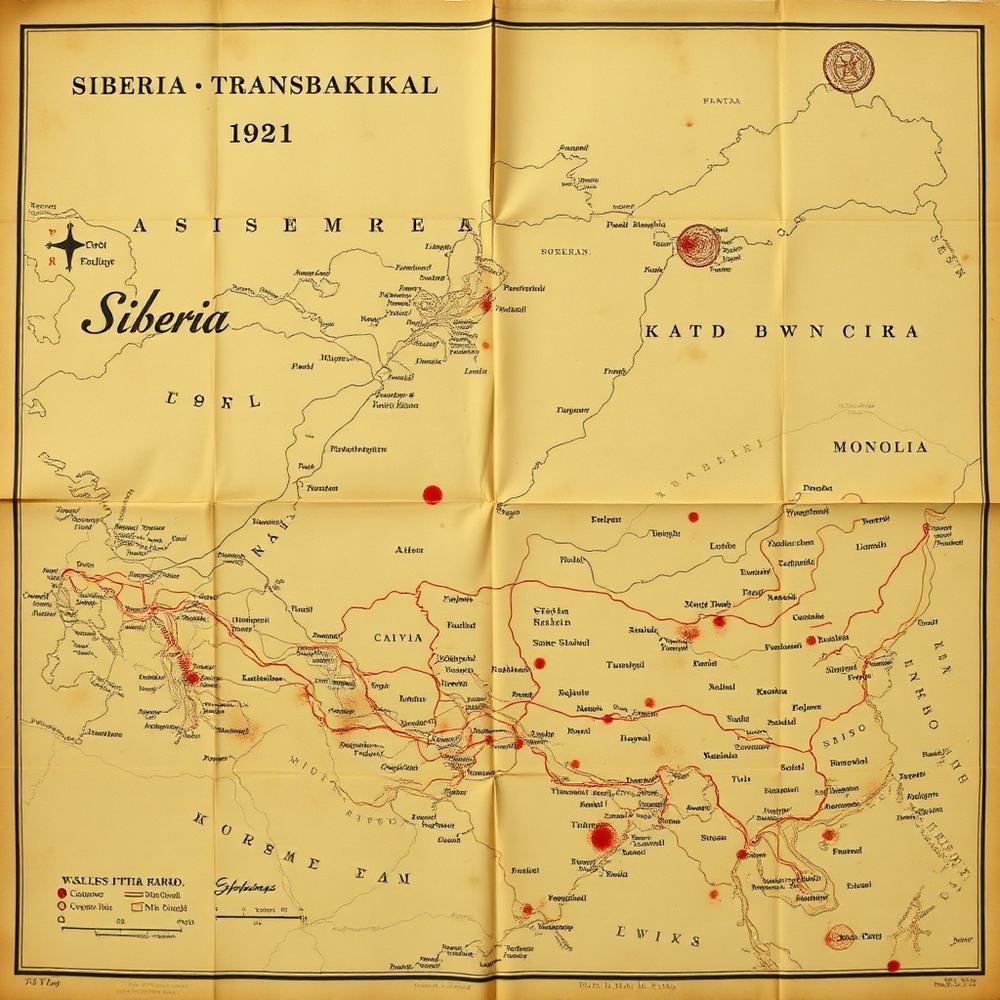
Jewish settlement in Urga grew out of Siberia rather than European Russia. From the 1860s onward, Jewish merchants — many descended from Cantonists, exiles or those granted first-guild trading rights — established themselves in Irkutsk, Verkhneudinsk and above all Kyakhta, the customs town that controlled the tea road from China. From Kyakhta it was a natural extension south to Urga, the caravan terminus.
Beyond the Pale of Settlement, ordinary residence restrictions applied unevenly, and outside Russian territory altogether they did not apply at all. Mongolia offered something rare in the Romanov world: a place where a Jewish trader's business was limited by capital and connections rather than by law.
The Kyakhta Tea Road
Tea, hides, wool, horses and later gold moved along the Kyakhta–Urga road in caravans of camels and carts. Jewish firms operated as brokers, financiers and commission agents at both ends, extending credit across a frontier where formal banking barely existed. Credit is the community's real footprint in Mongolian economic history.
Life in the Consular Quarter
By the 1910s Urga was three cities in one: the monastic city of Khüree around the Gandan and Zuun Khüree temples; Maimaicheng, the Chinese merchant town; and the Russian consular settlement between them. Jewish families lived in the third — Russian-speaking, subject in practice to the consulate's jurisdiction, sending their children to Russian schools.
Their occupations were characteristically frontier-professional: import-export, wool and hide buying, pharmacy and medicine, watchmaking, photography, and mining engineering. There was no synagogue building of record; worship was in private houses, and communal life ran on burial-society and mutual-credit lines rather than formal institutions. The community's engineers were among the very few people in the country able to assay metal, run a smelter and keep books that would satisfy a foreign auditor.
Between Two Occupations
The 1917 revolution cut the community's Siberian financial links and pushed a wave of Russian refugees — including Jewish families fleeing pogroms in the civil-war zone — south into Urga. The Chinese occupation of 1919 taxed and requisitioned everyone but did not single out Jews.
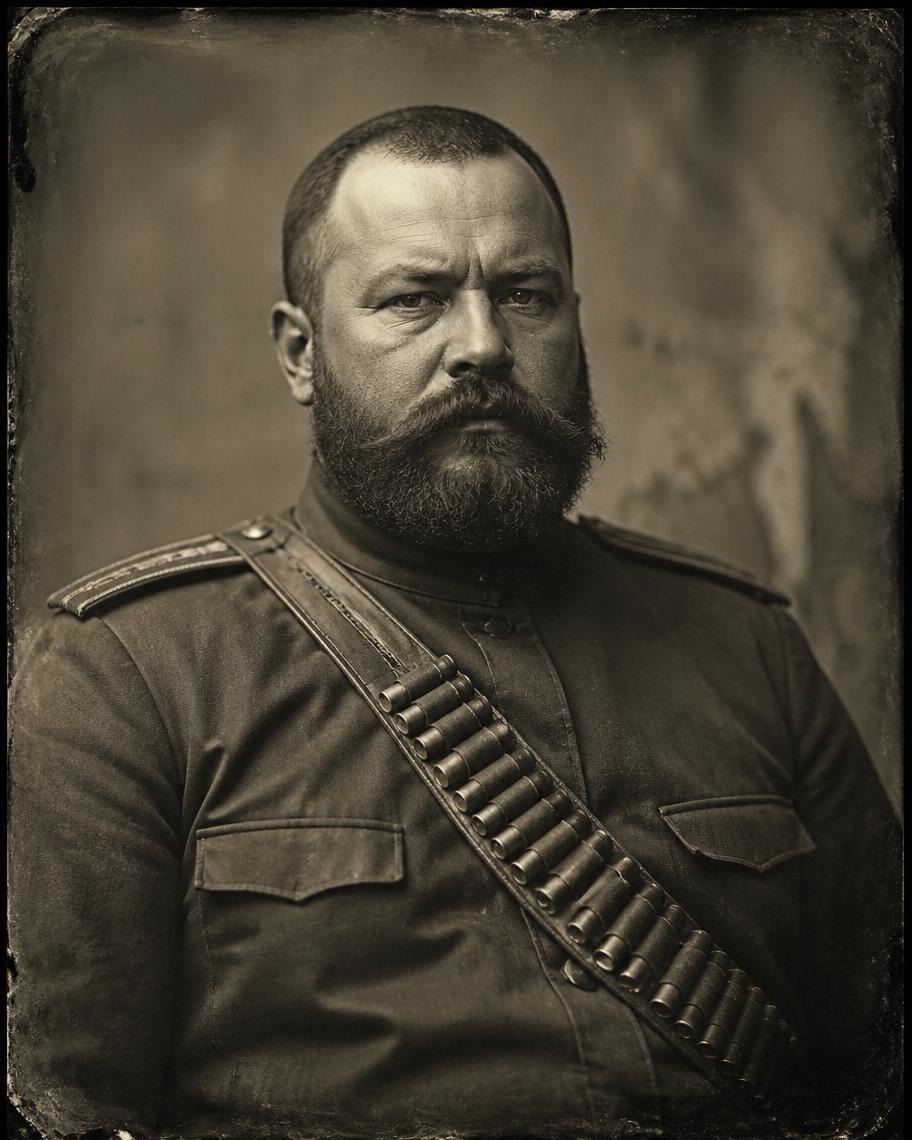
The refugees' arrival roughly doubled the community and made it visible in a way it had not been before, at exactly the moment when White forces across Siberia were consolidating an ideology that identified Bolshevism with Jewry. Ungern held that identification in its most absolute form: in his surviving letters and trial testimony he treats the revolution as a Jewish operation and its eradication as a religious duty.
February 1921
When the Asian Cavalry Division entered Urga, the sack that followed was not indiscriminate for long. Sipailov's counter-intelligence worked from lists, moving through the Russian quarter house by house. Eyewitness accounts — including Ossendowski's, and the reports gathered by foreign consulates afterwards — describe the near-total destruction of the Jewish population of the city: men, women and children killed over a period of days, property seized, and a handful of individuals spared only where a senior officer or Mongolian household intervened.
Estimates vary because no reliable census existed, but essentially the entire community was destroyed. Some survivors reached Kyakhta, Harbin or Tianjin. A Jewish presence in Mongolia did not meaningfully re-form; today's small community in Ulaanbaatar is a product of the post-1990 era, with no institutional continuity to the pre-1921 one.
The Exception That Drives the Novel
White Khan turns on the logic of the spared exception. A commander who believes he is exterminating the authors of the revolution still needs someone who can pour bar gold to a declared standard and keep a concession's ledgers audit-proof. In the novel, Israel-Eli Zanzer survives because the Mongol'Or laundering channel cannot survive without him — a protection that is also a captivity, and the moral engine of the book.
Historical Sources & Further Reading
- Ferdinand Ossendowski, Beasts, Men and Gods (1922) — eyewitness account of the Urga occupation.
- Consular reports from Urga and Kyakhta on the events of February–March 1921 (British and American files).
- Research on Siberian Jewry and the Kyakhta merchantry, Irkutsk regional archives.
- James Palmer, The Bloody White Baron (Faber & Faber, 2008) — chapters on the sack of Urga.
- Willard Sunderland, The Baron's Cloak (Cornell University Press, 2014).
- Testimony recorded at the trial of R. F. von Ungern-Sternberg, September 1921.